
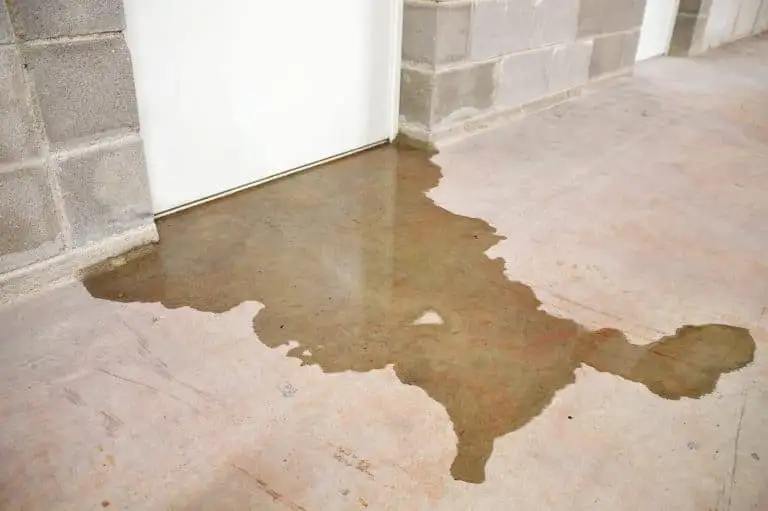
Middle Tennessee's Clay Soils Expand and Shrink With Every Rain Cycle
Expansive soils that swell when wet and shrink when dry create ongoing cyclic stress on foundations, causing heave, settlement, wall cracking, and the progressive structural damage that comes from a foundation in constant motion.
Not sure which fix applies to your situation? Browse our full range of solutions for foundation repair.
[ 01 ] Watch For These Signs
Signs that indicate foundation movement
Foundation cracks that open and close seasonally
Cracks that are wider in dry weather and narrower after rain, or that change width noticeably between seasons, are responding to the expansive soil cycling. The foundation is moving back and forth with the soil rather than being stable.
Slab heaving or upward displacement at interior floor sections
Sections of interior slab that have lifted above surrounding floor level, or that change height between wet and dry seasons, are being pushed up by expanding soil beneath them. This heave can crack tile floors, buckle wood flooring, and raise partitions built on the slab.
Symptom patterns that change with rainfall
Doors that stick more in dry weather and improve after rain, or floor slopes that appear to change between seasons, are tracking with the expansive soil cycle. Symptoms that correlate with moisture conditions are a strong indicator of expansive soil as the underlying cause.
Visible cracking in clay soil around the foundation during dry spells
The same clay soil that is pushing against the foundation when wet will crack visibly and pull away from the foundation when dry. Visible shrinkage cracks in the soil next to the foundation during summer dry spells confirm the presence of highly expansive clay.
Montmorillonite and smectite clay minerals, common in Middle Tennessee's Nashville Basin soils, can expand 10 to 15 percent in volume when saturated. This expansion pushes upward and outward against anything in contact with the soil, including foundation walls, slabs, and footings. When the same soil dries, it shrinks and pulls away, removing support.
Middle Tennessee's climate delivers significant rain in spring and fall, followed by dry periods in summer and winter. This seasonal cycle drives the wet-dry-wet cycling that causes expansive soils to heave and shrink repeatedly, ratcheting progressive damage into the foundation over years.
When one side of the foundation is shaded and retains moisture while the sun-exposed side dries, the soils on the two sides are at different moisture contents and different states of expansion. This inconsistency produces differential movement across the foundation rather than uniform movement.
Adding or removing trees, installing irrigation, changing grading, or adding impervious surfaces near the foundation changes the moisture distribution in the soil around the foundation. These changes can initiate new episodes of movement in soils that were previously stable.
[ 03 ] Recommended Solutions
How Ground Up fixes this
[ 04 ] Regional Context
Why Middle Tennessee foundations fail.
Middle Tennessee's expansive Maury and Dickson series clay soils shrink in dry summers and swell after rain, cycling by up to 15% in volume. Davidson, Williamson, and Rutherford County homes built directly on this clay face ongoing movement pressure. Ground Up diagnoses and permanently stabilizes foundations across the region.
The soil in this part of Tennessee is alive. It moves every single year, bigger in spring, smaller in August. A foundation that is not designed for that movement, or that has lost the drainage that keeps the cycle manageable, is a foundation that is going to show us problems eventually.
[ 05 ] Why Ground Up
The difference is in the diagnosis
Get several quotes and you'll see a wide range of prices. The gap isn't luck. It's whether the contractor finds the actual cause and stands behind the work.
- In-house certified crews: we never subcontract your repair
- Optional independent third-party engineer review on larger jobs
- Honest three-tier triage: we tell you what can wait, in writing
- Family owned from the same Shelbyville Highway address since 2009
[ 06 ] FAQ
Expansive Soil Damage to Foundations questions
Full soil replacement beneath an existing foundation is not practical. Lime or cement soil stabilization can modify clay soil chemistry to reduce expansiveness, but this approach is most practical during construction, not after. For existing homes, the most reliable approach is controlling soil moisture through drainage management, keeping the soil at a consistent moisture level reduces the amplitude of the wet-dry cycle and its effect on the foundation.
Piers that extend below the active zone, the depth to which seasonal moisture changes penetrate, anchor the foundation to stable soil below where expansive movement occurs. This stops settlement from soil shrinkage but does not address upward heave from saturated soil against the foundation. A comprehensive solution typically combines pier installation with drainage correction to manage moisture levels.
Yes. The Nashville Basin, which includes Murfreesboro, Smyrna, La Vergne, and surrounding communities, has particularly active clay soils. The degree of expansiveness varies with the specific soil horizon and depth. Some areas have thin clay layers over limestone bedrock; others have deep clay profiles that are highly reactive to moisture changes.
The key to managing expansive soil damage is reducing the amplitude of the wet-dry cycle. Proper drainage keeps the soil from becoming saturated, which limits upward heave. Consistent irrigation in dry periods prevents the soil from drying and shrinking completely, which limits downward settlement. Together, both practices reduce the cyclic stress on the foundation.
A geotechnical investigation, soil borings and lab testing of the clay content and expansiveness, provides objective data about what is below the foundation. It is most valuable for large-scale repairs, new construction on suspected expansive soil, or situations where the standard repair approach may not be sufficient. We can recommend when a geotechnical investigation adds value to the repair design.

Free guide
Get the free foundation settlement guide
- A room by room checklist of warning signs
- How Middle Tennessee red clay can move a house
- What happens at a free inspection
Your guide is on its way.
Check your inbox for an email from Ground Up Foundation Repair. If it is not there in a few minutes, check your spam or promotions folder.
More Problem Signs
Other signs to watch for
Bouncing or Springy Floors
A floor that bounces when you walk across it, feels spongy or soft in specific areas, or vibrates noticeably when someone moves in an adjacent room is a floor that lacks adequate structural support below it. In Middle Tennessee, this symptom is most common in pier-and-beam homes, houses with a crawl space beneath the living area, where the supporting wood beam and joist system has been weakened by moisture, age, or original under-construction.
Bowing Basement Walls
A bowing basement wall has visibly deflected inward from the outside soil pressure pressing against it. In Middle Tennessee, the region's expansive red clay absorbs moisture and swells against foundation walls, generating lateral pressure that concrete block, brick, and even poured concrete walls cannot always resist indefinitely. What starts as a hairline crack can progress to a visible curve in the wall face, and once a wall begins moving, the cycle accelerates.
Carpenter Ant Infestation
Carpenter ants are often mistaken for a pest problem requiring only extermination. In reality, carpenter ants are an indicator species: they preferentially colonize wood that has been softened by moisture, rot, or previous insect damage. When carpenter ants are found inside a home, particularly in the lower levels, near the perimeter walls, or in the crawl space, they are pointing to a wood moisture problem in the foundation framing. That moisture problem is almost always the result of inadequate crawl space drainage, failed vapor barriers, high humidity, or standing water in the crawl space that has been saturating the sill plates, floor joists, and beams for months or years.
Cracked Block Foundation Walls
Concrete masonry unit (block) foundation walls are common in Middle Tennessee homes built from the 1950s through the 1990s. Unlike poured concrete walls, block foundations are built in courses with mortar joints, making them both more permeable and more susceptible to cracking at the joint locations. Cracks in block foundations are classified by their orientation: horizontal cracks indicate bending failure from lateral soil pressure and are the most structurally serious. Vertical cracks indicate settlement or shrinkage. Stair step cracks indicate differential settlement at the corner. Shear cracks that displace one side of the wall vertically relative to the other indicate advanced structural failure. Each pattern requires a different evaluation approach.
Cracked Bricks
Brick veneer on residential homes is not a structural element. It is a decorative cladding attached to the wood-frame structure behind it. When the foundation moves, the wood frame moves with it, and the brick veneer moves too, but because brick is rigid and the mortar joints are weaker than the brick units themselves, the movement is expressed as cracking along the mortar joints or, in severe cases, through the brick faces themselves. The pattern of cracking reveals the direction and cause of the underlying foundation movement. Stair step cracks indicate differential settlement. Horizontal cracks indicate lateral loading on a foundation wall. Vertical cracks at corners indicate shear from differential settlement at a corner footing.
Cracks at Door Frames, Ceilings, and Corners
Cracks at door frames, ceiling-to-wall junctions, and interior corners are concentration points for stress in a building's structure. When the foundation moves, the framing above it distorts, and the rigid drywall and plaster finish materials crack at these high-stress junctions. The pattern of cracking at corners and ceiling lines is diagnostically useful: cracks at inside corners between walls indicate in-plane racking of the framing. Cracks along the ceiling-to-wall junction indicate differential vertical movement between the wall and the floor or ceiling structure above. Cracks radiating from door frame corners are the most classic foundation settlement indicator.
Seeing these signs in your home?
We'll find the cause and tell you honestly what it needs, free.