How to Test Your Sump Pump and Battery Backup Before Winter
Fall sump pump maintenance for Middle Tennessee homes: how to test the pump and its battery backup before winter rain and ice storms, and what a test can miss.

A sump pump usually sits quietly in its pit for months, so it is easy to forget until water is already rising. Fall is a good time to check it, along with any battery backup, before winter rain and ice storms arrive. This guide walks through a simple test that many homeowners can do in a few minutes, and it explains what that test can and cannot tell you about your basement waterproofing system.
Why Test a Sump Pump in the Fall in Middle Tennessee?
Fall is a calm season for basement and crawl space work in Middle Tennessee, and it comes before winter ice events and spring rain. A pump that fails a test in November can be repaired or replaced before it has to work hard.
Winter here brings freeze and thaw cycles. An ice storm can knock out power, and a sump pump that runs on house power stops when the power goes out.
Spring brings more water. Rain saturates the red clay soil and raises the water table, and new dampness in a basement or crawl space often shows up in that season.
Nashville neighborhoods often have high water tables. In those homes, Ground Up’s main solution for groundwater is an interior perimeter drain with a sump system.
A test in the fall leaves time to repair a weak part before winter.
What Does a Sump Pump Do in a Waterproofing System?
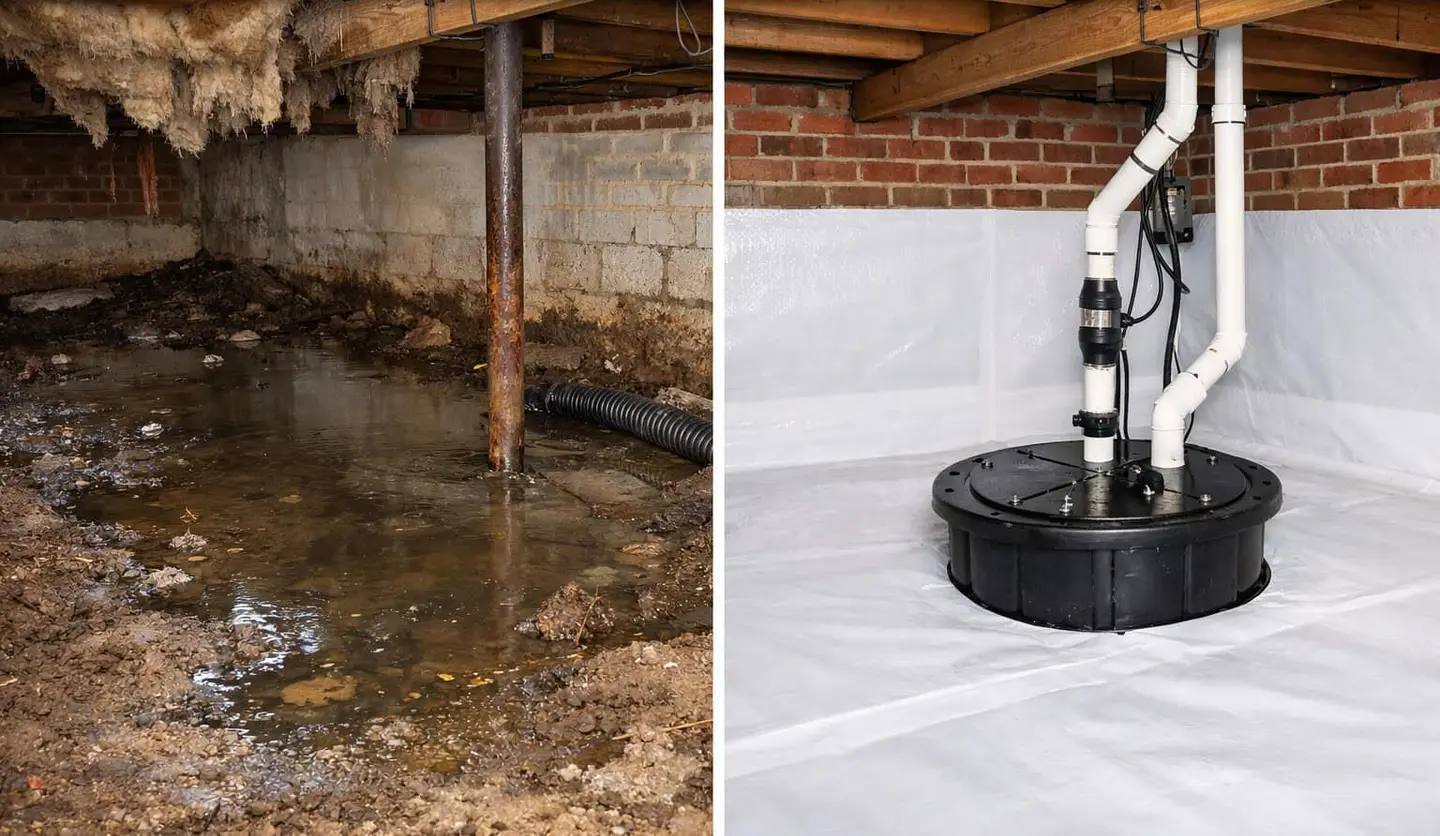
A sump pump removes water that collects in a pit, called a sump, below the floor.
In the waterproofing systems Ground Up installs, the pump is the last step in a drain that gathers groundwater from below the home.
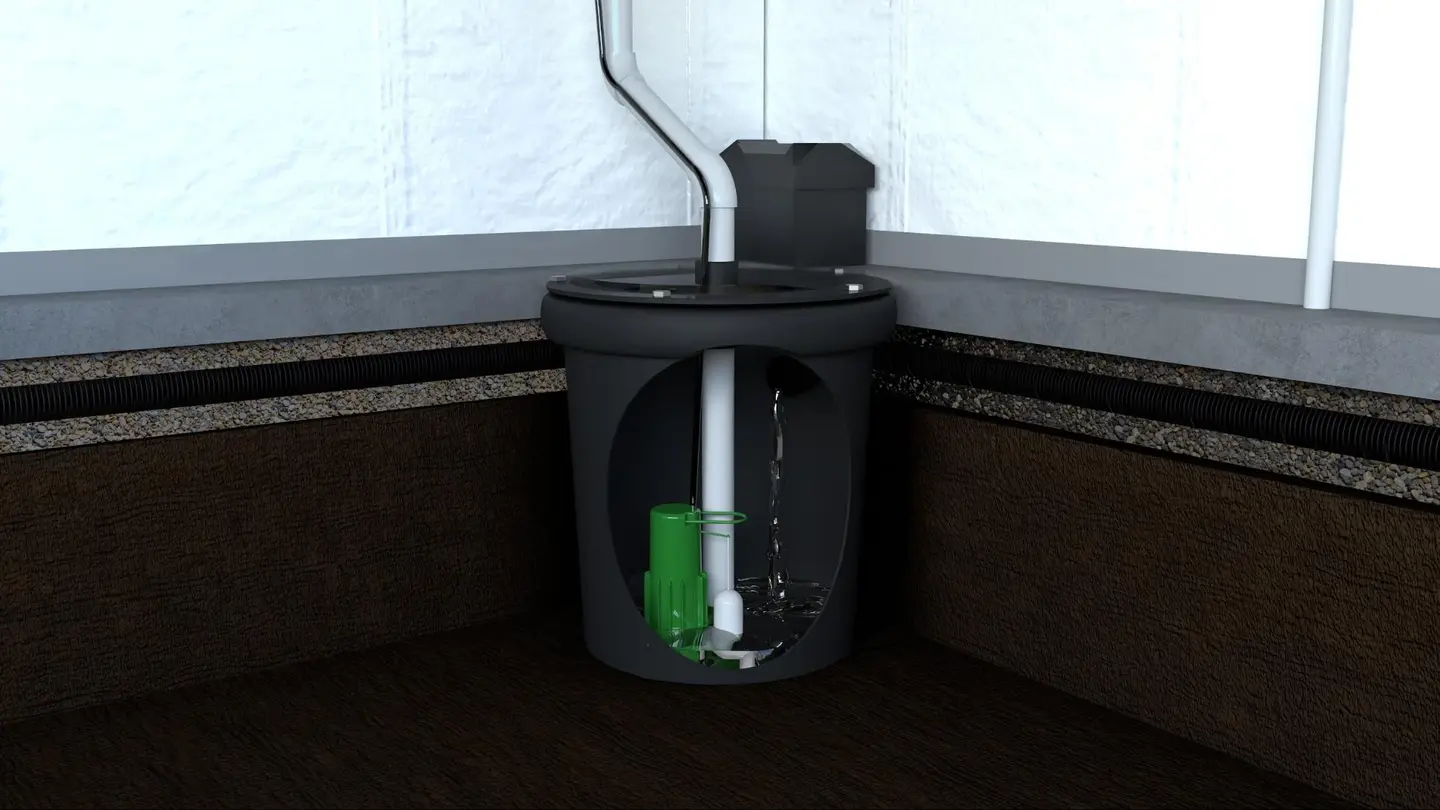
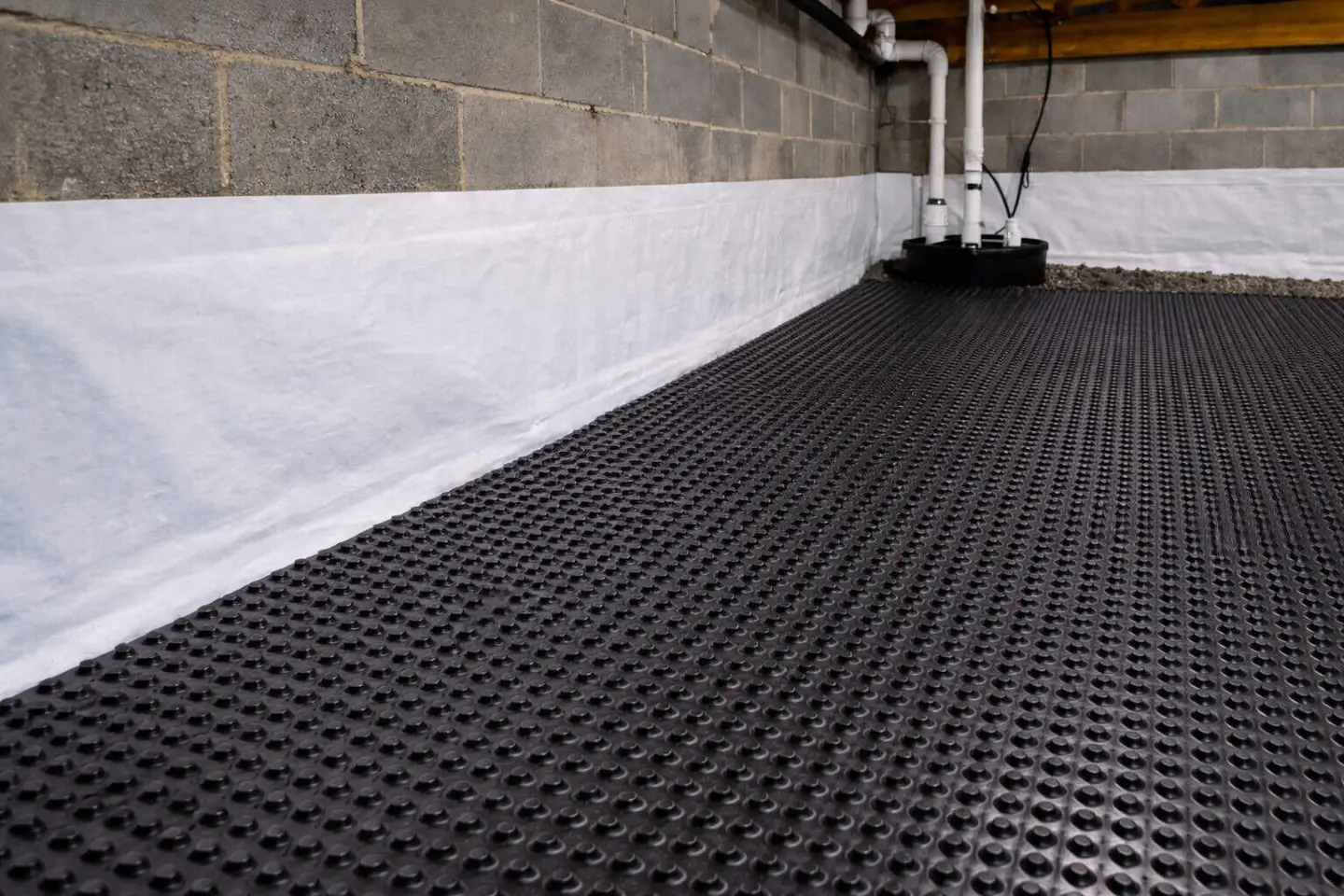
With interior basement waterproofing, a drain runs around the inside edge of the basement floor. That drain collects groundwater rising from below and carries it to the sump, and the pump sends it out of the home.
Because the pump is the last step in the system, a test checks more than the pump. It also tells you whether water can leave the house once the pump moves it.
Sump pumps come in two basic types. A pedestal pump has its motor above the pit, with the pump at the bottom. A submersible pump sits underwater at the bottom of the pit. Either type works well with proper maintenance.
Both types use a float switch. When the water in the pit rises to a set level, the float turns the pump on. When the water drops, the float turns it off.
How Do You Test a Sump Pump?
You can test most sump pumps by adding water to the pit and watching the float turn the pump on and off. Before you start, make sure the pump is plugged in.
Here is a simple way to run the test:
- Remove the lid from the pit, if it has one, and use a flashlight to look inside. Check for dirt, gravel, or other material that could clog the pump.
- Pour water into the pit slowly, at about the speed water would usually flow in, until the float rises and the pump turns on.
- Watch the water level drop and make sure the pump shuts off on its own.
- Repeat the test so the pump turns on and off at least twice.
- Listen while it runs. A pump that sounds like it is grinding gravel, or a float that moves slowly, may mean the pump or the float needs to be replaced.
If the pit is dry, you can also lift the float by hand for a few seconds to see whether the pump starts and runs smoothly, then lower it slowly.
A test like this can give you a general idea of whether the pump is working. It may not show how the pump will handle a long, heavy rain.
How Do You Test a Sump Pump Battery Backup?
A battery backup pump sits in the same pit as the main pump and turns on only when the main pump fails or loses power. You can usually check it the same way you check the main pump.
The backup pump runs on a battery, so it can keep working during a power outage. That only helps if the battery is ready when it is needed. Keeping the battery maintained is an important part of owning a backup pump.
To check it, lift the float on the backup pump for a few seconds and confirm that the backup pump starts and runs smoothly, then lower the float slowly. If you are not sure how your backup is set up, an inspection can show you how it works and what it needs.
If your home does not have a backup and you want one, Ground Up installs battery backup sump pumps as part of its waterproofing work.
What Sump Pump Maintenance Should You Do Outside the House?
Every sump pump test should include the discharge pipe outside. The pipe should be clear, and it should send water away from the house.
If the outlet is plugged or blocked by leaves or dirt, the water may have nowhere to go.
Walk outside while someone runs the test inside. Look for water coming out of the pipe and moving away from the house. If water pools near the foundation, yard drainage solutions can help carry it farther away.
What Problems Can a Sump Pump Test Reveal?
A test can show several common problems before a heavy rain does. Finding them in the fall gives you time to have them repaired.
Signs that a pump may need service include:
- The pump does not start when the float rises.
- The pump starts slowly, or only some of the time.
- The pump does not shut off after the water level drops.
- The float sticks or moves slowly.
- The pump sounds like it is grinding gravel.
Worn or rusted motor bearings are a common cause of pump failure. Another common problem is a float switch that does not make good electrical contact, so the pump turns on slowly or not at all.
Our post on common sump pump problems covers more of the issues homeowners run into.
Does a Crawl Space Sump Pump Need the Same Check?
Yes. A crawl space sump pump does the same job as a basement pump, and the same test applies.
In a crawl space, the pump is usually part of a drainage system that collects groundwater and pumps it out of the crawl space. The pit may be harder to reach, so plan for a flashlight and a safe way in. If getting into the crawl space is not practical for you, an inspection can cover the check.
Ground Up installs crawl space sump pumps for homes that need them.
What Can a Working Sump Pump Not Protect Against?
A working sump pump handles groundwater that rises from below the home. It does not protect a home from flood water that comes in above ground level.
Standard interior waterproofing is built for groundwater. It does not protect a home that takes in several feet of flood water during a major weather event. Water that comes in through doors and windows, or over the top of the foundation, is beyond what a sump system is built to handle. Our page on basement flooding explains the difference.
When Should You Call Ground Up About Your Sump Pump?
Consider calling if your pump fails any part of the test, if the backup does not start, or if you are not sure what you are looking at. An inspection can show whether the pump, the float, the backup, or the discharge needs attention.
Ground Up Foundation Repair has worked on Middle Tennessee homes since 2009 from the same Murfreesboro address. Ground Up’s own crews install and service sump pump systems, along with the interior drainage that feeds them. Ground Up does not subcontract this work.
The inspection is free, and we will tell you what we find without pressure to sign anything. To book a free waterproofing consultation, call (615) 624-1027 or contact our team.

Written by
Derek Veselich
Co-founder, Ground Up Foundation Repair, Waterproofing and Concrete Leveling
As the Co-founder of Ground Up Foundation Repair, Waterproofing and Concrete Leveling, Derek Veselich has built his career and this company on one simple principle: do the job right the first time. With more than 15 years of experience in foundation repair and waterproofing, Derek is deeply committed to protecting Middle Tennessee homes from the ground up.
More about Derek