Leveling Concrete: Mud Jacking vs. Foam Foundation Repair
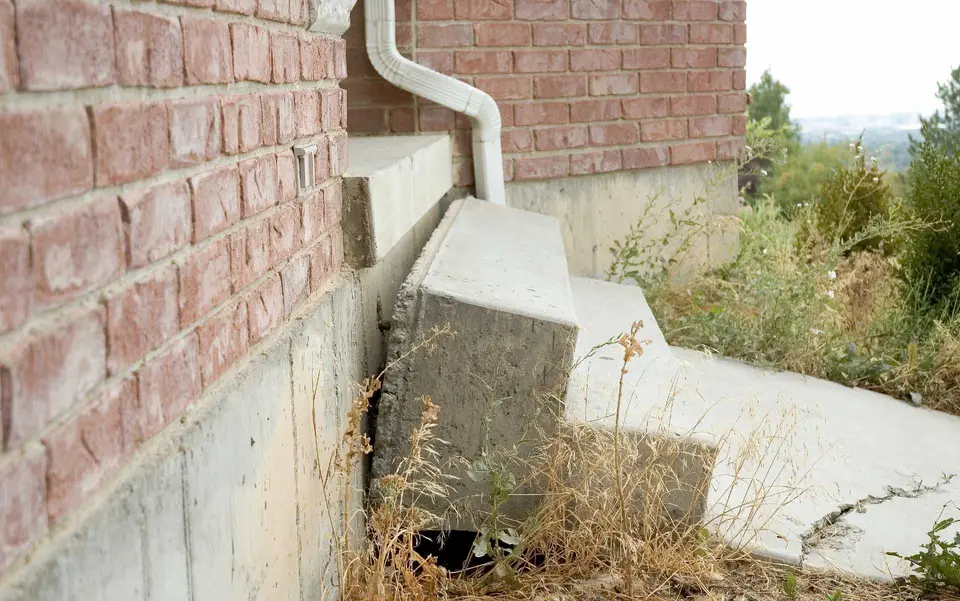
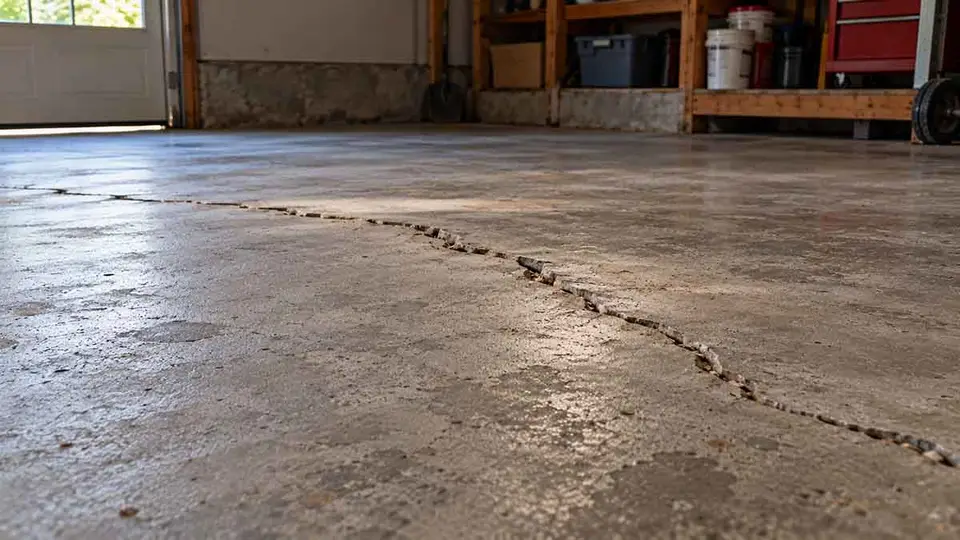
Sinking foundations are common results of both time and environmental stressors. There are two main options for concrete repair—concrete lifting, affectionately known as “mud jacking” or foam foundation repair.
If you find yourself asking, “What is mud jacking?” or, “Is polyurethane safe?” continue reading as we explore the details of both procedures, along with the pros and cons of each, to help you make an informed decision concerning your sinking foundation.
WHAT IS MUD JACKING?
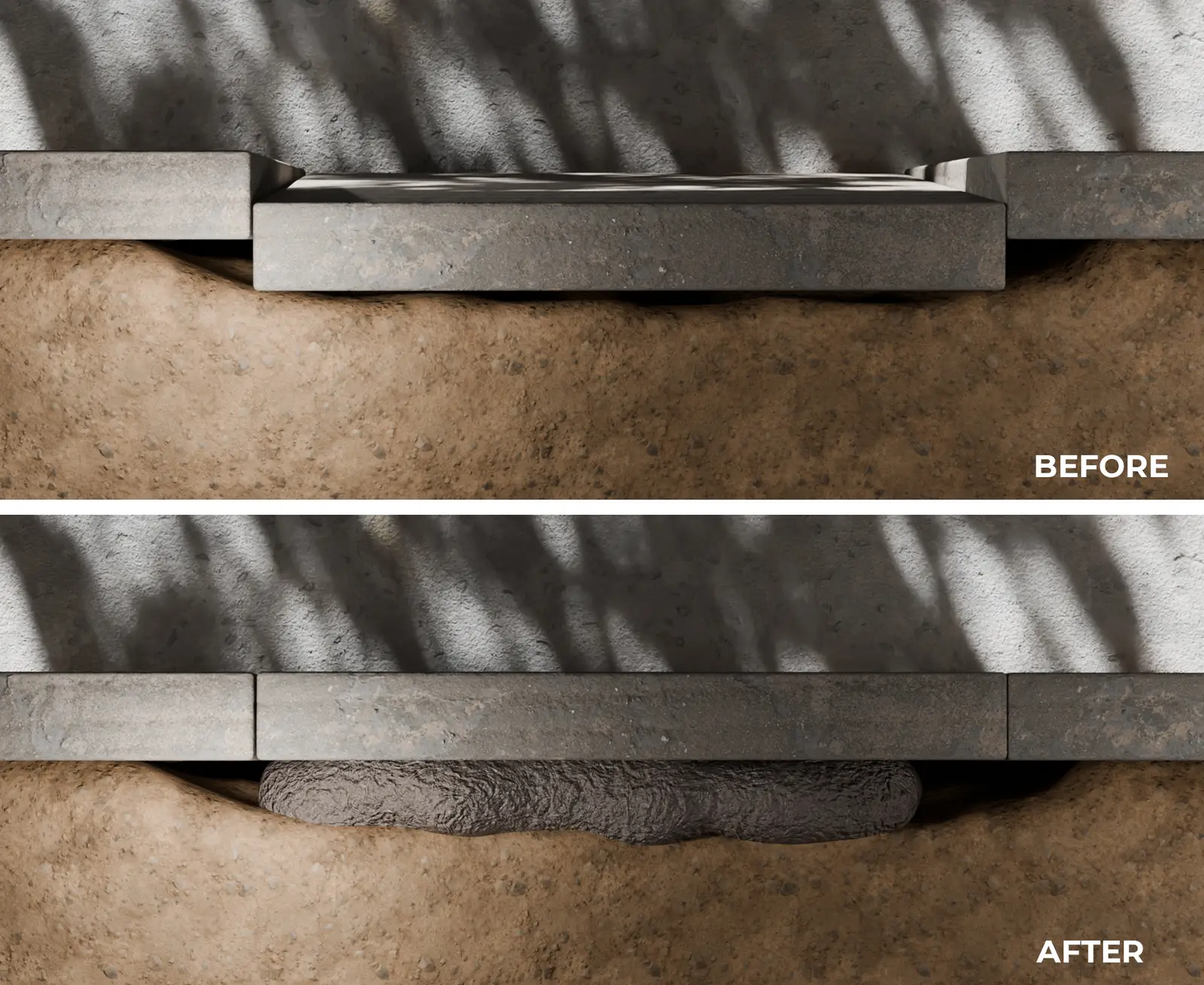
Mud jacking, also known as slab jacking or slab leveling, is a procedure that begins with drilling holes in sunken concrete. These holes are then filled with a slurry containing cement, soil, water, and sand. This slurry expands as it dries, filling each void in the sunken foundation and raising concrete slabs back to their proper level.
WHAT IS POLYURETHANE CONCRETE INJECTION (POLY JACKING)?
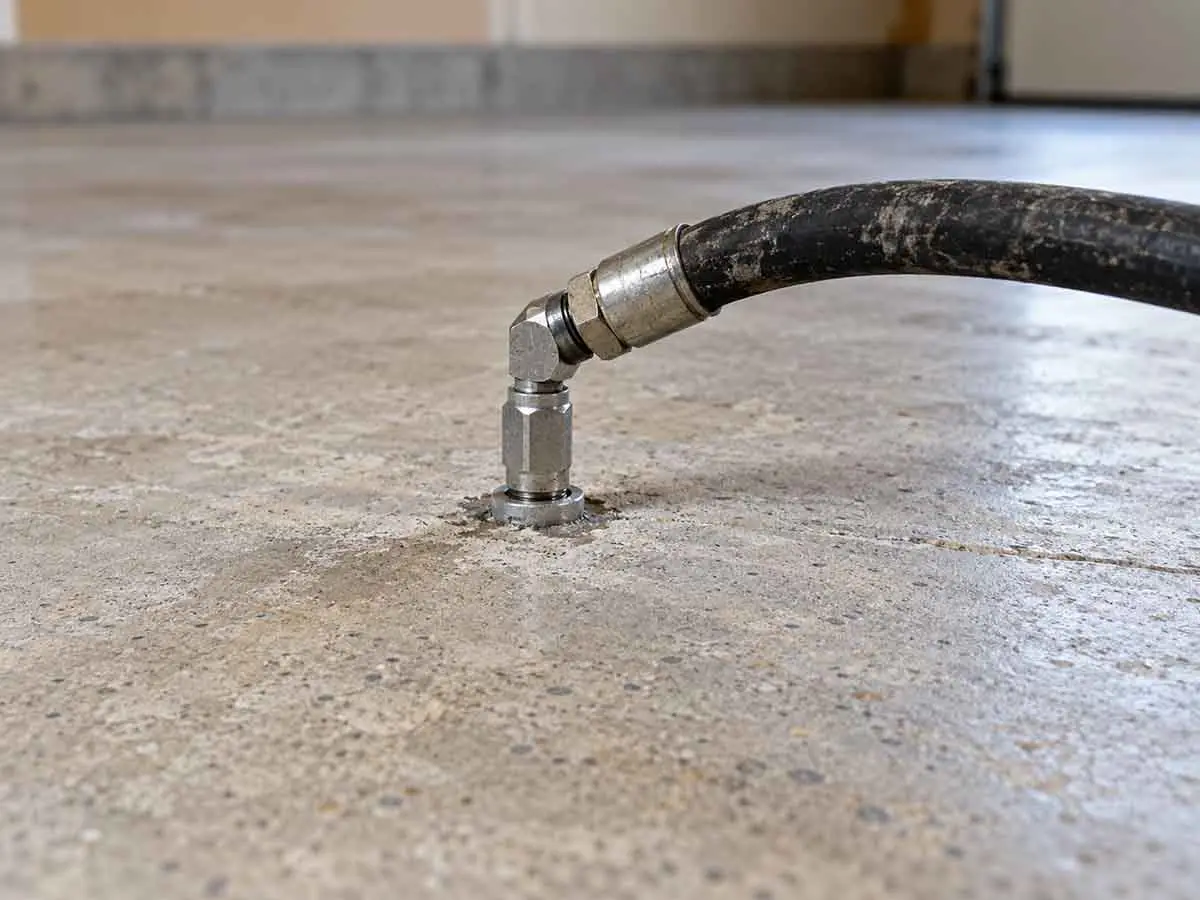
In this procedure, expanding foam concrete made of polyurethane is injected into pre-drilled holes. The polyurethane finds its way into cracks and cures, raising concrete slabs as it dries. It is also referred to as poly-jacking.
The foam goes in as a liquid and flows into the empty space under the slab, which the rough cement slurry can have trouble filling. As the foam sets, it expands to fill that space and lifts the concrete back toward level, often within a few hours.
MUD JACKING: PROS AND CONS
This procedure has the benefit of a low wait time from performance to use; homeowners can be back in their homes a mere 48 hours after the procedure is completed, as the slurry used can bear weight much faster than an additional application of new concrete. Additionally, it is the one that most contractors can easily complete and has zero impact on the environment, as the majority of its components are naturally sourced.
Unfortunately, it has a number of downsides. The texture of the slurry is naturally rough; this makes it difficult to fill all the spaces between sunken concrete slabs and leaves the foundation prone to more sinking. This makes it a short term fix, as more slurry would have to be injected in a matter of a few years. Because the slurry ingredients are sourced naturally, they are prone to erosion. Additionally, they are very heavy—an average of 40 percent heavier than polyurethane—and eventually cause soil compression and further sinking. This procedure is also less visually appealing, as holes as big as 2 inches in diameter must be drilled in order to apply the slurry.
POLYURETHANE CONCRETE INJECTION: PROS AND CONS
The application of expanding foam concrete is a procedure that lasts; frequent repetition is not necessary. But is polyurethane safe? Yes! Polyurethane is both light enough to prevent further soil compression and dense enough to fill each crack in the concrete slabs. In fact, any soil existing beneath the layers of polyurethane will bind to it and become more structurally sound. It is even environmentally safe, making it a suitable alternative to the naturally sourced slurry used in slab leveling. Visually, the hole drilled to insert the foam is as small as 5/8 of an inch and easily repaired.
Polyurethane injection is less commonly offered, because fewer contractors carry the equipment and training it requires.
CONCRETE LEVELING IN MIDDLE TENNESSEE
Both methods lift sunken concrete, but they are not the same job. Ground Up Foundation Repair lifts slabs with polyurethane foam: it uses smaller injection holes, cures in minutes, and its light weight does not load the soil under the slab.
Contact Ground Up Foundation Repair today for all of your concrete leveling needs!

Written by
Derek Veselich
Co-founder, Ground Up Foundation Repair, Waterproofing and Concrete Leveling
As the Co-founder of Ground Up Foundation Repair, Waterproofing and Concrete Leveling, Derek Veselich has built his career and this company on one simple principle: do the job right the first time. With more than 15 years of experience in foundation repair and waterproofing, Derek is deeply committed to protecting Middle Tennessee homes from the ground up.
More about Derek