Does Homeowners Insurance Cover Sagging Floors?
Whether your policy pays for sagging floors comes down to what caused them. Here is how coverage usually reads and how to document the cause.
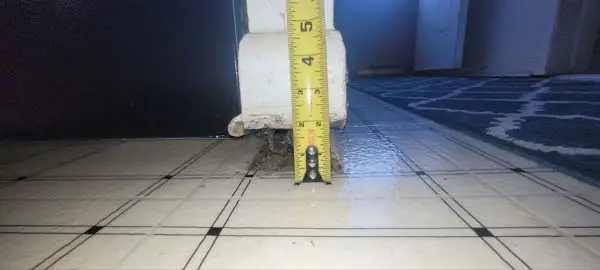
Sometimes. Whether homeowners insurance pays for sagging floors depends almost entirely on what caused the sagging, not on how bad the floor looks. A floor that dropped because a supply line burst under the house is treated very differently from a floor that settled slowly over fifteen years of Middle Tennessee clay moving under the footings.
That single distinction decides most claims. Below is how coverage usually reads, where to look in your own policy, and how to get the cause documented properly before you file anything.
Why the Cause Matters More Than the Damage
Homeowners policies generally draw a line between damage that happens suddenly and by accident, and damage that builds up slowly over time. Sudden and accidental events are the ones policies are written to cover. Gradual wear, settlement, and soil movement are usually treated as maintenance, and maintenance is the homeowner’s responsibility.
Two houses can have the exact same visible problem. One has a bathroom floor that sank three weeks after a drain line let go underneath it. The other has a hallway that has been slowly tilting since the mid two thousands. The first often has a path to coverage. The second usually does not.
So the question your adjuster is really asking is not “how bad is it.” It is “what happened, and when.” That is why the inspection matters more than the photographs.
What Makes Floors Sag in Middle Tennessee Homes
Around Murfreesboro and most of Rutherford County, the ground is red clay sitting over limestone bedrock. That clay swells when it takes on water in a wet spring and shrinks when it dries out in August. Your foundation rides along with it. Over ten or fifteen years of that cycle, footings move, and floors above them go out of level.
In older Nashville neighborhoods the more common driver is a high water table keeping a crawl space damp year round. Wet wood is weak wood. Girders, joists, and support posts lose strength, and the floor above them starts to give.
Other causes we find regularly in this region:
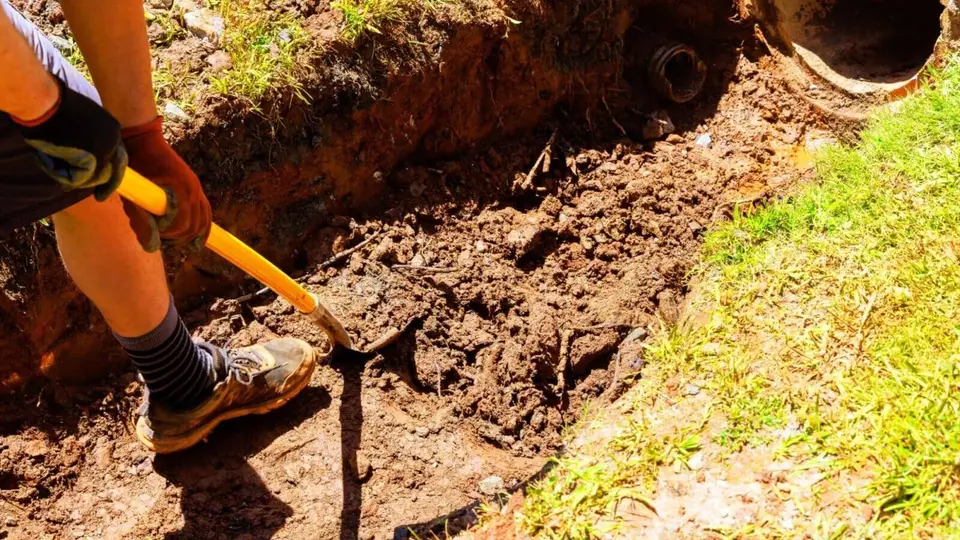
- A plumbing leak under a slab or inside a crawl space, washing out the soil that was carrying the load
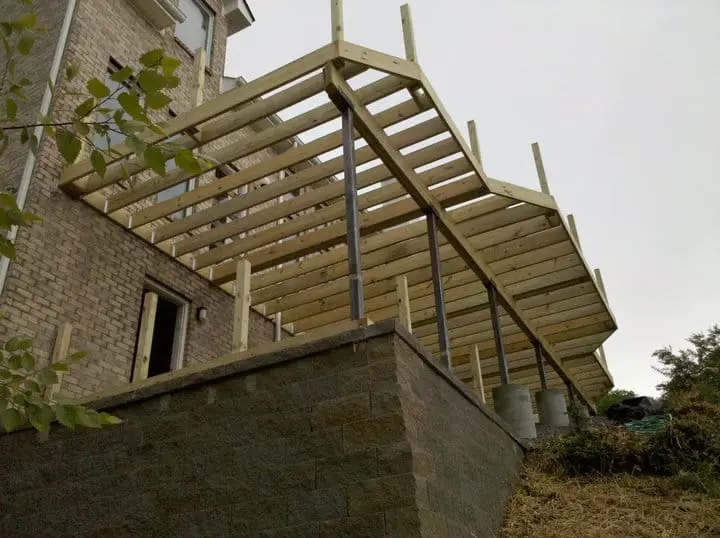
- Undersized or rotted support posts and beams in a pier and beam home
- Poor drainage sending roof and yard water straight to the foundation
- Original construction that did not account for the soil under that particular lot
- Limestone and karst features in areas like Cookeville and parts of Williamson County
Of those, the plumbing leak is the one most likely to have a covered path, because it is sudden and accidental. The rest are usually classified as gradual. You can read more about the symptom itself on our page covering sagging floors and the related pattern of uneven floors.
Where to Look in Your Own Policy
Your policy is the only document that decides your claim. Nothing on this page overrides it. Pull out your declarations page and the full policy booklet, then read these parts:
The exclusions section. Many homeowners policies carry an exclusion for earth movement, which can be worded to include settling, shifting, expansion, and contraction of soil. If your policy has one, find out exactly how it is written.
The wording around sudden and accidental water damage. Policies often separate the cost of fixing the leak itself from the cost of repairing what the water damaged. Those can be treated as two different things.
Your deductible. Know the number before you decide whether filing is worth it.
Any endorsements you added. Some homeowners have bought coverage that a standard policy would not include.
If the language is hard to follow, your agent is obligated to explain it. Ask them to point you to the specific paragraph rather than giving you a yes or no over the phone.
How a Foundation Inspection Documents the Cause
An adjuster is deciding a cause question. The more clearly the cause is established, the less room there is for guesswork.
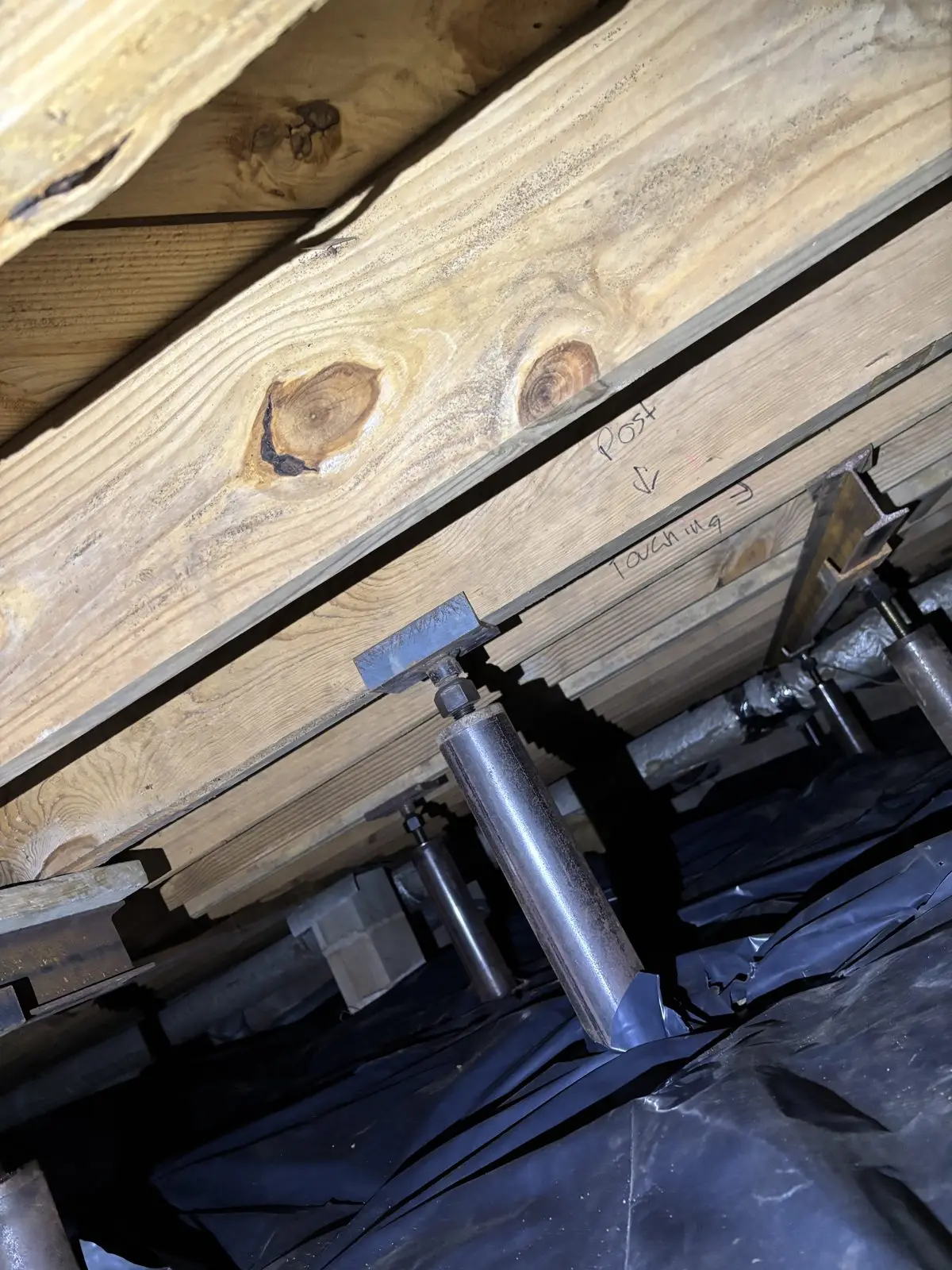
A foundation inspection from us is free and carries no obligation. On a sagging floor we take elevation readings across the floor to show how much movement there actually is and where it is worst. We get into the crawl space and look at the joists, girders, and posts directly. We trace the moisture back to where it is coming from, whether that is a plumbing leak, groundwater, or surface water reaching the foundation. Then you get it in writing.
That written diagnosis is useful to you whether or not you ever file a claim. If you do file, it gives the adjuster something specific to respond to. If the cause turns out to be gradual soil movement, you have saved yourself the trouble of filing a claim that was not going to go anywhere, and you know what you are actually dealing with.
For larger jobs we also offer an optional review by an independent structural engineer. That engineer has no stake in whether you spend money on repairs. If you move forward with the work, the engineer’s fee comes back to you as a credit on the bid.
What Happens if Your Claim Is Denied
A denial is not automatically the end of it. Ask for the denial in writing and ask which specific policy provision it rests on. Then compare that provision against what the inspection actually found. Sometimes a claim is denied on an assumption about the cause that the evidence does not support.
If you still disagree after that, you can ask for another adjuster to look at it, or talk to someone who handles insurance claims professionally. Our walkthrough of the foundation repair claims process covers the steps in more detail.
We also offer financing, so a repair that insurance will not cover does not have to be paid for all at once.
Urgent, Planned, or Monitor: How We Sort What We Find
We put every finding into one of three categories at the inspection, and we tell you which one you are in.
Urgent. Handle it now. Active water, or wall movement we can measure.
Planned. Address it within the year. Real, but not accelerating.
Monitor. Track it, do not repair it yet. Cosmetic or static.
We do not invent urgency. If something can wait, we say so. What we will tell you plainly is that foundation movement gets worse over time, so a problem in the planned category does not resolve itself by being ignored.
What Repair Actually Involves
The fix depends on what the inspection found. If the floor is sagging because the foundation under it has settled, the answer is usually a pier system driven down past the active clay layer to stable bearing. If the framing itself has failed in a damp crawl space, the answer is sagging floor repair at the joists, girders, and posts, paired with fixing the moisture that weakened them. New framing in a wet crawl space will rot again, so we address the water first.
Foundation underpinning with helical or push piers carries a lifetime transferable warranty against further settlement in the piered sections, and transferable means it stays with the home when you sell. Other services carry their own warranty terms, which we go through with you at the quote.
Every job is done by our own certified, background checked crews. We do not subcontract the work out.
How to Get a Straight Answer About Your Floors
If your floors are sloping, bouncing, or separating from the baseboards, the useful first step is finding out why, in writing, before you call your insurer. It is free, and it costs you nothing but an hour.
We have been working on Middle Tennessee homes from the same Shelbyville Highway address since 2009, and this soil is most of what we deal with. Schedule your free foundation inspection today.